A garage door is often dealt with as a background attribute till a major weather occasion examines it. That is generally when its real role comes to be evident. In solid wind, the garage door is not just a relocating panel at the front of the house, it becomes part of the structure envelope. If it fails, the pressure changes inside the home can be serious sufficient to harm walls, ceilings, roof cladding, and contents, while busted parts can turn into unsafe particles. That is a sobering truth in cyclone-prone components of Queensland, but the lesson brings weight anywhere tornados bring high winds, flying particles, and prolonged rain.
Storm durability begins with understanding that not every garage door is built for the exact same job. A door that functions well in a moderate climate might not use adequate stamina, securing performance, or rust resistance for coastal and wind-exposed locations. The upgrade conversation is for that reason not just about convenience or appearance. It has to do with matching the door, the opener, the hardware, and the maintenance regimen to the threats around the property.
Why the garage door is worthy of more attention than it typically gets
People often focus on the roof covering, windows, and external doors when preparing for extreme weather condition. Those are essential, but the garage door is a huge opening and among one of the most weak spots in a residence. If a storm puts pressure on that opening and the door gives way, the remainder of the structure can be exposed to pressures it was never ever implied to absorb.
Queensland assistance is blunt on this point. In cyclone-prone areas, garage doors require to satisfy wind-rated requirements, and older doors may not have sufficient toughness for cyclonic winds. That matters because many homes still have actually doors installed prior to the existing demands took hold. A door can look strong, run efficiently, and still be unsuitable for the wind region it sits in.
The functional issue is not abstract. When a door stops working, the damage can spread swiftly. Ceiling linings can buckle. Roofing system cladding can lift. Wall mounting can twist. Contents saved in the garage can be ruined in minutes. When wind goes into the garage, the pressure adjustments inside the house can compound the damage. This is why garage door upgrades are not an aesthetic luxury when extreme weather is an authentic danger. They belong to standard building resilience.
Standards, conformity, and what they indicate in practice
For property owners, the language about standards can seem completely dry till a storm puts it to the examination. In Queensland, garage doors in cyclone-prone areas should adhere to AS/NZS 4505. Queensland Federal government support states doors installed in influenced areas considering that 2012 need to fulfill the wind-rated criterion. That date matters due to the fact that it produces a clear splitting line for many homes and strata buildings. If a door predates that period, it deserves examining whether it was ever upgraded or replaced.
This is where garage door criteria stop being a technical footnote and enter into the decision-making process. Requirement Australia keeps in mind that Australian Standards are volunteer unless they are referenced by legislation, at which point they can become required. In Queensland, the structure framework is based upon the National Building Code, the Queensland Advancement Code, the Building Act 1975, and the Structure Law 2021. That is the structure that offers force to the conformity conversation.
For owners, supervisors, and strata boards, the important concern is not whether a door has a tag that seems calming. The concern is whether it is appropriate for the place, installed correctly, and preserved in a manner that maintains its rated efficiency. A certified door that is terribly maintained can still end up being a powerlessness. Also, a properly maintained door that was never meant for neighborhood wind problems can leave the structure exposed.
The type of upgrades that really improve storm performance
The most effective tornado durability upgrades typically function as a system. A more powerful door assists, however so do the rails, springtimes, tracks, repairings, opener, and regular servicing. It is seldom a single magic item. It is more often a collection of improvements that make the door much better able to resist stress, stay in its track, and proceed running when the weather transforms rough.
A wind-rated replacement is one of the most noticeable upgrade, especially where the existing door is old or unproven. In cyclone-prone areas, that might indicate changing a general-purpose property door with a system created and evaluated for the pertinent conditions. That change can be especially essential for homes near the coast or in open, subjected locations where wind loading is a real concern.
The opener deserves focus as well. Some openers consist of solution indicator lights, which can be a useful pointer that the system schedules for focus. Extra broadly, if the opener is not effectively matched to the door, or if it has actually ended up being undependable, it can jeopardize the whole configuration. A garage door that is structurally sound however struggles to open and shut easily might still be a trouble in a storm when the household requires fast, trusted operation.
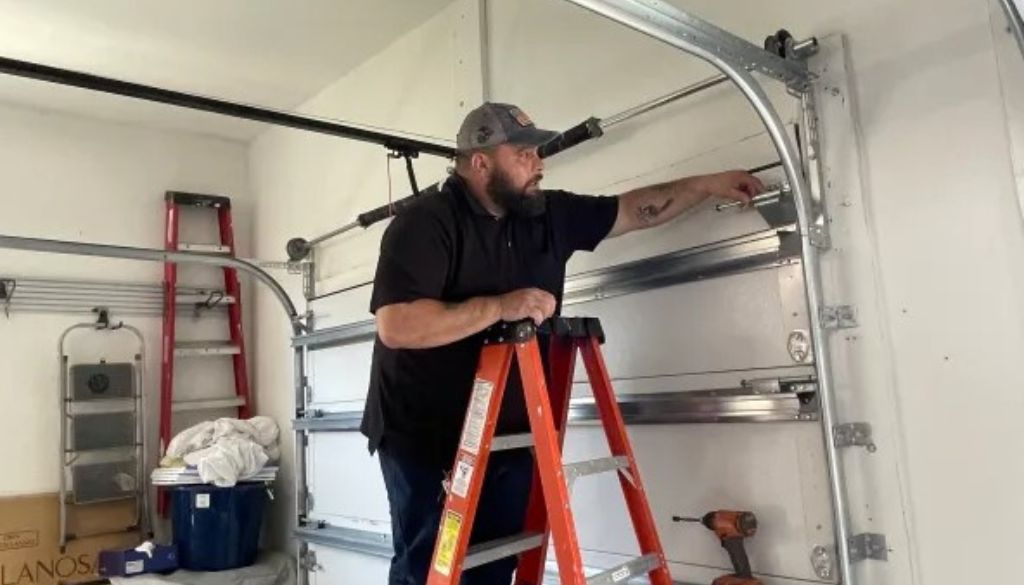
Hardware matters greater than lots of owners anticipate. Springs, cable televisions, rollers, and mendings lug a great deal of the lots, and they age unevenly. If a garage door is already noisy, jerky, or sluggish, those signs and symptoms typically indicate use that ought to not be ignored. In a storm-resilience context, that type of deterioration is not merely bothersome. It can signify that the door is shedding the smooth positioning and mechanical balance it needs to execute under stress.
Choosing the appropriate door kind for the site
There is no one-size-fits-all response when it comes to garage doors, since website problems form the very best choice. A door that suits a sheltered suburban block could not be the most effective choice for a seaside home that copes with salt exposure and stronger winds. The concern is not just which door looks best, yet which one fits the local risk account and the means the garage is used.
Sectional doors are common completely reason. They can be sensible, reputable, and compatible with modern openers. Roller doors fit numerous homes too, particularly where headroom is restricted. Turn doors have their area, yet they can be much less forgiving where space, wind direct exposure, or operating loads are concerns. The point is not that kind is generally exceptional. The point is that the door requires to be examined against wind score, upkeep gain access to, operational smoothness, and lasting durability.
Coastal residential or commercial properties are worthy of added care. Salt air speeds up rust, and that can shorten the life of installations, tracks, springtimes, and fasteners. For those homes, a door upgrade is commonly most effective when the owner assumes past the panel itself and considers the surrounding metal components too. A rust-prone fixings package can undermine an otherwise suitable door. That is why the best storm-resilience choices are normally made with the complete setting in mind, not simply the brochure.
Opener upgrades, smart controls, and storm readiness
The opener does more than conserve you from raising a hefty door by hand. It adds to exactly how accurately the door can be protected, just how swiftly it can be closed in negative weather condition, and just how safely it runs over time. Some modern systems include integrated signs that aid owners understand when maintenance is due. That small attribute can make a meaningful distinction because maintenance is very easy to hold off when a door appears to be working fine.
There is also a practical safety angle. Storm events are often complied with by power interruptions, debris, and disruption. A reliable opener, coupled with a door that opens and shuts smoothly, helps in reducing the chance of the door being left partly open or forced into unpleasant hand-operated usage at the most awful possible moment. Smart controls can include ease, yet the strength advantage depends upon the underlying equipment being in excellent order. Technology serves just when the door itself is mechanically sound.
It is likewise worth keeping in mind the difference in between a small fault and a major one. A remote with a flat battery or an opener detached from the door may seem like a small problem, and frequently it is. Also then, fixing must be handled very carefully. B&D recommends that qualified professionals need to deal with repair services and maintenance. That recommendations is sensible since garage doors store power in their springs and wires, and those components can be unsafe when managed without the appropriate training.
Maintenance becomes part of the upgrade, not an optional extra
A storm-resilient garage door is not just an item selection. It is a continuous upkeep commitment. Gliderol's advice is a beneficial pointer that regular specialist maintenance aids both safety and life-span. Their upkeep recommendations states panel doors should be fueled oil every 3 to 6 months and serviced every 2 years, with even more regular attention for seaside residential or commercial properties. That sort of routine shows the reality that weather condition, salt, dirt, and garage door repair services day-to-day use all take a toll.
There is a common lure to deal with garage door maintenance as something to do just when a fault shows up. By then, wear may currently have progressed. Springs stumble. Tracks drift out of placement. Rollers become harsh. Openers function more difficult than they should. In storm-prone areas, that slow-moving damage issues because a door that is already having a hard time in fair weather is less likely to cope well when high winds or stress modifications include added stress.
Warranty factors to consider also enhance the point. Gliderol notes that falling short to adhere to authorised servicing periods may influence guarantee protection, particularly for motorised elements. B&D similarly mentions that a few of its household garage door and opener bundles lug a 10-year Total Self-confidence Warranty, yet just if serviced within the very first 12 months and after that a minimum of every two years. Those details are not marketing fluff. They show that suppliers see servicing as part of the product's functioning life, not an optional maintenance habit.
Repair or change, a decision that ought to be made honestly
Not every weak garage door needs instant replacement. Sometimes a targeted repair can bring back risk-free, reliable operation. A worn springtime can be replaced. A broken cable can be fixed. An opener fault might turn out to be a basic service problem. In those cases, a seasoned technician can commonly bring the system back into shape without beginning with scratch.
But there are times when replacement is the much better phone call, specifically if the door is old, rusty, or otherwise ranked for neighborhood conditions. If a property remains in a cyclone-prone location and the existing door predates present conformity assumptions, a repair work might just postpone the genuine issue. The very same is true if the door has reoccuring faults, noticeable wear and tear, or a history of bad procedure that no longer motivates confidence.
This is where judgement matters. A garage door that functions "the majority of the moment" is not the same thing as a door that is storm-ready. Owners occasionally invest cash restoring a system that was never created to do in the conditions it faces. A better investment can be to replace the entire setting up with an effectively rated door and matching equipment, particularly when the existing system is approaching the end of its useful life.
What a professional analysis need to look at
A complete garage door assessment is more than a glance at whether the door opens and shuts. It ought to think about the age of the door, any kind of indications of rust or exhaustion, the problem of springs and cables, the state of the opener, and whether the whole system is ideal for the website's wind exposure. In seaside or cyclone-prone locations, it must likewise take into consideration whether the door follows the pertinent wind-rated requirement and whether there is proof of servicing at the best intervals.
For strata supervisors and commercial property owners, the stakes can be also greater since one stopped working door can influence numerous lots, saved devices, or business procedures. Industrial garage door fixings particularly need to be come close to with caution and correct documentation. A huge door in a work environment is not just a larger version of a residential door. It may undergo heavier cycling, more regular usage, and greater effects if it falls short throughout extreme climate or a power interruption.
That is why specialist evaluations are best dealt with as component of a prepared durability approach. They determine weak points before the weather condition does. They also aid owners decide whether the best feedback is repair service, upgrade, or full replacement. Guesswork is costly when tornados become part of the threat profile.
The little information that make a large difference
Storm resilience often boils down to details that appear minor up until they are not. A door that secures appropriately is less most likely to rattle, flex, or confess water in hefty rain. A door that stays well balanced is less likely to stress its opener. Hardware that resists corrosion is more likely to hold its score in time. A servicing history that is in fact adhered to is better than a shiny new setup that has actually been overlooked since the day it was fitted.
There is likewise the issue of habit. Several proprietors only consider the garage door when it stops working. A better habit is to listen for changes in sound, seek early signs of corrosion, and deal with slow operation as a warning. If the door starts to think twice or the opener behaves differently, that is commonly the minute to act. Waiting up until the following storm season is seldom wise.
A sensible upgrade path often begins belt-drive opener with a basic concern: if high winds struck tomorrow, would certainly this door still act as meant? If the answer doubts, the residential property probably has space for improvement. That improvement may be a brand-new wind-rated door, a much better opener, even more durable equipment, or a maintenance program that takes the local environment seriously. In some cases it is every one of those at once.
Building resilience one opening at a time
Garage door upgrades do not receive the exact same interest as roof tie-downs or home window protection, yet they can make a substantial difference to how a home or company climates serious problems. In Queensland, the compliance image is clear enough to make the issue impossible to overlook. Garage door standards, specifically AS/NZS 4505 where they use, belong to the more comprehensive structure that helps buildings stand up to cyclone problems. A certified door installed appropriately and preserved properly is far more than a convenience product. It is a protective system.
For home owners, the best initial step is usually an honest analysis of the existing door and its background. For strata supervisors and entrepreneur, the job is more comprehensive, since several openings, greater use, and greater consequences make strength planning even more vital. Either way, the logic coincides. A storm-resilient garage door is not chosen when and failed to remember. It is picked carefully, set up correctly, serviced routinely, and changed prior to age and corrosion turn it into a liability.
That is the genuine value of upgrading. It is not simply that a far better door might survive a storm a lot more beautifully. It is that the entire structure stands a far better possibility of staying intact when the weather gets rough, and that deserves far more than the price of the hardware.