Most homeowners do not think about garage door springs till one breaks. That is understandable. Springs rest above the door or along with the tracks, doing hard mechanical job quietly and concealed. Yet they are one of one of the most fundamental parts of the whole system. When a spring damages or snaps, the door can become hefty, crooked, loud, or totally inoperable. In many cases, it can additionally come to be dangerous.
The brief answer is that garage door spring substitute is usually driven much less by age alone and a lot more by cycle life, door weight, everyday use, climate, and how well the rest of the system is maintained. In a typical home, typical springs frequently last someplace between 7 and 12 years. In a busy home, they can wear rather. In a lower usage setup, they might last much longer. For industrial garage door repair, the timeline is generally much shorter because the door merely opens up and closes much more often.
If you desire a beneficial general rule, plan to start believing seriously concerning substitute around the 7 year mark for a basic residential arrangement, and quicker if your garage door is used as the main entrance to your house. That does not mean every springtime requires to be changed exactly on time. It suggests the clever relocation is to look for wear before you get stunned by a sudden failure.
What garage door springs actually do
A garage door spring does not just aid the door relocation. It reverses the weight of the door so the opener and the individual utilizing the door do not bear that full load. A dual garage door can consider a pair hundred extra pounds or even more relying on material, insulation, and dimension. Springs store mechanical energy when the door closes and release it as the door opens.
That is why a garage door opener is not implied to raise a dead weight on its own. The opener overviews and controls the activity. The springs do the hefty lifting. When springs compromise, the opener stress, the cords and rollers take extra anxiety, and the entire system wears out much faster. I have actually seen several service calls that started as "the opener is failing" when the real trouble was a pair of aging springs that had shed tension over time.
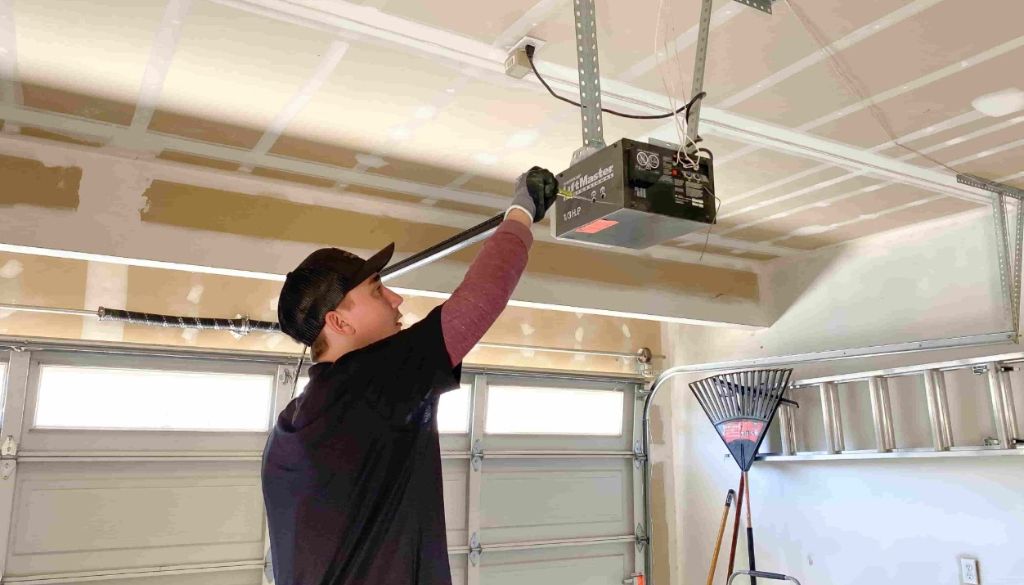
There are 2 common springtime enters domestic garage door repair. Torsion springs install over the door opening and spin on a shaft. Expansion springtimes stretch along the horizontal tracks. Torsion systems are normally a lot more sturdy, smoother, and more secure when effectively mounted, which is one reason they prevail in more recent garage door installment projects.
Why "how often" depends upon cycles, not just years
Spring life is commonly ranked in cycles. One cycle is one full opening and one complete closing. Many standard domestic springs are rated around 10,000 cycles, though higher cycle alternatives are available. If a family opens up the garage door four times a day, that is about 1,460 cycles per year. At that rate, a 10,000 cycle springtime may last near seven years. If the family uses the garage as the key front door and runs the door 8 times a day, that same springtime could be nearing the end of its life in regarding 3 to four years.
This is where house owners often obtain caught off guard. A garage door that sees regular usage can break long prior to it "looks old." A spring is an exhaustion element. Each open and close produces stress. Over thousands of repeatings, the steel gradually sheds resilience.
Commercial residential properties are a different group altogether. In business garage door repair, a door might cycle loads of times daily. Storage facilities, solution bays, filling locations, and parking structures can melt through basic domestic quality expectations quickly. For those applications, greater cycle springtimes and even more constant assessment schedules are not a luxury. They are standard operating discipline.
Typical replacement timelines for real households
A quiet family with a removed garage that opens only a number of times a day may get close to a decade or perhaps past from a good set of springs. A busy household with teenager motorists, delivery website traffic, and a garage that doubles as the primary entrance may need garage door spring replacement in 4 to 6 years, often sooner.
Material matters too. A hefty protected steel door places various needs on springtimes than a lighter solitary door. So does a wood carriage style door. I have seen gorgeous custom wood doors that looked excellent from the road but needed carefully matched springtime systems as a result of the extra weight. If the springtimes were undersized, put on accelerated rapidly, and the garage door opener ended up overworked.
Here is a useful means to think about it:
Light use, around 2 to 4 cycles a day, frequently lasts 7 to 12 years. Moderate use, around 4 to 6 cycles a day, typically lasts 5 to 8 years. Heavy domestic usage, around 6 to 10 cycles a day, can bring substitute right into the 3 to 6 year range. Commercial usage varies commonly, yet numerous doors need normal springtime focus far sooner due to high daily cycling.Those are not assurances. They are preparing varieties. The same spring can live a shorter or longer life depending on installment quality, upkeep, environment, and whether the door is effectively balanced.
The ideas that inform you substitute is obtaining close
Springs seldom fall short without leaving hints. The trouble is that the tips are easy to miss out on if you are not expecting them. The earliest indicators are typically subtle. The door might really feel somewhat heavier when you disengage the opener. It might be reluctant near the flooring. It might slam close a little faster than before or climb erratically. You may listen to much more creaking, standing out, or a sharp metal breeze if a springtime lastly breaks.
A well balanced garage door should stay approximately in place if you separate the opener and lift it halfway by hand. It should not race up or drop hard. If it does, springtime stress might be off, or the springtimes might be worn. That is one of the simplest useful checks in property garage door repair, though it must be done very carefully and just if the door can be safely controlled.
One information lots of people ignore is the noticeable void in a torsion spring after damage. A damaged torsion springtime often leaves a clear splitting up in the coil. With extension springtimes, you may observe one side hanging in different ways or looking extended compared with the other.
Sometimes the opener begins complaining before the springs do. If the garage door opener seems strained, relocates slower than normal, or reverses all of a sudden, the problem may not be digital whatsoever. Weak springtimes require the opener to make up. That added effort can reduce the life of gears, electric motors, braces, and hinges.
Replace one springtime or both?
When a two spring system has one broken spring, the far better practice is generally to change both. Springs in a matched set tend to age together. If one has failed from tiredness, the various other is typically not far behind. Changing only the broken spring can save cash in the moment, however it commonly causes a 2nd service contact the close to future.
There is additionally an equilibrium concern. New and old springtimes do not execute identically. A fresh spring paired with a used spring can develop unequal training and additional stress on the shaft, bearings, cords, and opener. In the area, that imbalance appears as jerky motion, additional sound, and early wear elsewhere in the system.
The same principle commonly applies in commercial garage door repair, though the choice might rely scheduled garage door maintenance on system style, cycle score, and operational demands. In either setting, the goal is not just to get the door moving again. It is to restore safe, balanced, predictable performance.
Why springtime replacement ought to be planned, not just reacted to
Many property owners deal with springtime failing as an inescapable shock. It does not have to be in this way. Planned substitute has actual advantages. You can arrange service at a practical time, prevent getting trapped with an automobile inside, reduce the possibility of opener damages, and select updated high cycle springs if your present set wore faster than expected.
An intended see additionally gives a service technician the chance to examine the whole door system. In excellent garage door repair technique, springs are never ever a separated component. The condition of the drums, wires, center bearing, end bearing plates, rollers, joints, track alignment, and opener setups all affect spring efficiency. A door that is out of balance or dragging in the tracks will certainly put on springtimes much faster. So will a door with poor roller activity or torn cables.
I remember one homeowner who kept changing openers every couple of years due to the fact that every one at some point "quit drawing." The real concern was a hefty insulated door with incorrect spring sizing and curved track sections from an old influence. Once the door was appropriately well balanced and the track remedied, the next opener lasted generally. That kind of scenario is much more typical than people think.
Seasonal climate and corrosion issue more than individuals expect
Climate plays a peaceful but important function in spring life. In moist or coastal locations, deterioration can weaken steel over time. In places with large temperature level swings, winter can make marginal springtimes most likely to stop working due to the fact that the steel becomes less forgiving and lubricant enlarges. It is common to hear about a spring breaking on a cold morning after seeming fine the night before.
Rust is not simply cosmetic. Rust develops surface roughness, and roughness boosts friction between coils on torsion springs. That added friction can speed up wear and cause loud operation. A little preventive upkeep can help, but it can not turn around steel fatigue once the springtime is near completion of its rated life.
If your garage is not climate controlled and the door obtains used greatly through all periods, it makes good sense to inspect spring condition more carefully after 5 to 7 years, even if no obvious failure has occurred. The cost of checking is moderate compared to the inconvenience of a break at the most awful possible time.
Maintenance habits that can extend springtime life
No maintenance routine can make springtimes last permanently, however excellent treatment can assist them reach their intended lifespan and decrease stress overall door system. The essentials are not complicated, however consistency matters.
Listen to the door as soon as a month. New grinding, standing out, or stressing audios should have attention. Watch the door step. Jerky travel, uneven lifting, or a door that does not sit degree can signify springtime or cord issues. Keep rollers, joints, and springtimes lightly lubed with an item intended for garage doors. Schedule routine service if the door gets hefty usage or if it is older than five to 7 years. Test equilibrium thoroughly with the opener disengaged, but only if you can do it securely and the door is not currently showing indicators of failure.One caution right here: lubrication helps reduce rubbing and sound, however it does not "repair" a used spring. Individuals in some cases listen to less sound after oiling and assume the trouble is resolved. In reality, the springtime may still be nearing the end.
Does a brand-new garage door change the spring schedule?
Yes, due to the fact that brand-new garage door installation frequently transforms the weight and balance qualities of the system. If you update from an older non shielded door to a thicker shielded model, or button from steel to wood, the original springtimes might no longer be correct. Springs has to match the actual door weight and drum arrangement. Also little mismatches can cause poor balance and much shorter spring life.
This is also why springtime work ought to not be treated as a common components swap. The appropriate spring is chosen by greater than door size. Height, weight, cord drum size, shaft setup, and needed cycle life all matter. An appropriately sized spring collection can improve door feel, decrease opener strain, and cut down on repeat repairs.
When a new door enters, ask what cycle score the springtimes have and whether an upgraded option is readily available. The price distinction between conventional and high cycle springs is commonly reasonable compared with the labor cost of future replacement. For a household that utilizes the garage continuously, updating at the start can be money well spent.
How the opener suits the picture
A garage door opener is often condemned for problems that begin with spring wear. That is not completely unreasonable, due to the fact that opener signs are what many people discover initially. The remote quiting working regularly. The motor appears loud. The safety reverse becomes erratic. The rail shakes more than common. But in most cases, the opener is not the root issue.
Think of the opener as a manager, not a worker. It controls movement but ought to not be doing the actual training. A well balanced door can typically be raised by hand with modest effort. If your opener is pulling tough each day since weak springtimes are no more doing their share, the opener will pay the price.
That is why a service technician doing truthful garage door repair checks balance prior to selling opener components. It is additionally why springtime replacement and opener adjustment often go together. When brand-new springtimes are installed, opener pressure settings and take a trip limitations may need fine adjusting so the entire system functions smoothly.
Safety is the major factor this work comes from a pro
There are home projects that award patience and cautious understanding. Garage door spring substitute is normally not one of them. Torsion springtimes are wound under substantial tension. An error with winding bars, set screws, or door safeguarding can trigger major injury. Extension spring systems have their own threats, particularly if security wires are missing or damaged.
This is not terrify talk. It is merely a category of repair where the saved power is enough to do real harm. A knowledgeable technician recognizes how to safeguard the door, select the correct springtime, set proper tension, check cable television placement, validate balance, and inspect relevant equipment prior to returning the door to service.
Professional residential garage door repair also helps you stay clear of a second issue, which is installing the incorrect springtime. A door might show up to help a while with a wrong spring, however the strain turns up later in the opener, cable televisions, drums, and door sections.
When commercial doors require a different strategy
Commercial garage door repair is worthy of different therapy due to the fact that the operating demands are so various. A rolling steel solution door at a storehouse or an overhanging sectional door at an auto store can cycle even more in one month than a home door carries out in a year. Because environment, awaiting noticeable signs is not an audio strategy.
A planned maintenance timetable is the better approach. High cycle springs, routine balance checks, and recorded evaluations reduce downtime and help stay clear of safety incidents. If an industrial door belongs to daily procedures, spring failing is not simply bothersome. It can disrupt delivery, block car access, and develop responsibility issues if the opening is left unsecured.
For structure supervisors, the inquiry is much less "just how typically need to springtimes be replaced" and a lot more "just how do we match the springtime routine to actual usage." If a door is objective critical, spring replacement should be proactive instead of reactive.
A useful planning technique for homeowners
If you have no concept just how old your springs are, start with monitoring and a solution check. Learn whether your system makes use of torsion or expansion springs, whether there is one springtime or two, and whether the door is effectively balanced. Ask the technician for the likely cycle ranking and whether the springtimes appear original to the door.
If your springtimes are previous 7 years old and the garage sees daily usage, it is affordable to start budgeting for garage door spring replacement, also if the door still functions. If your house depends on the garage as the main entrance, that spending plan ought to be a little higher on the concern listing than many people understand. A fell short spring often tends to occur on a workday morning, not when the timing is convenient.
Homeowners that are currently arranging garage door installment, significant garage door repair, or a garage door opener substitute need to additionally ask whether the springs are still ideal for the arrangement. Integrating relevant work can save labor and protect against a piecemeal fixing cycle.
The best timing is not a dealt with calendar day. It is the factor where age, usage, and signs and symptoms start to line up. For several homes, that minute shows up in between year five and year 8. For heavy use homes, it can come previously. For gently made use of doors with well matched hardware, it can come later. The objective is not to change springs too soon. It is to change them prior to they stop working at full trouble and complete risk.
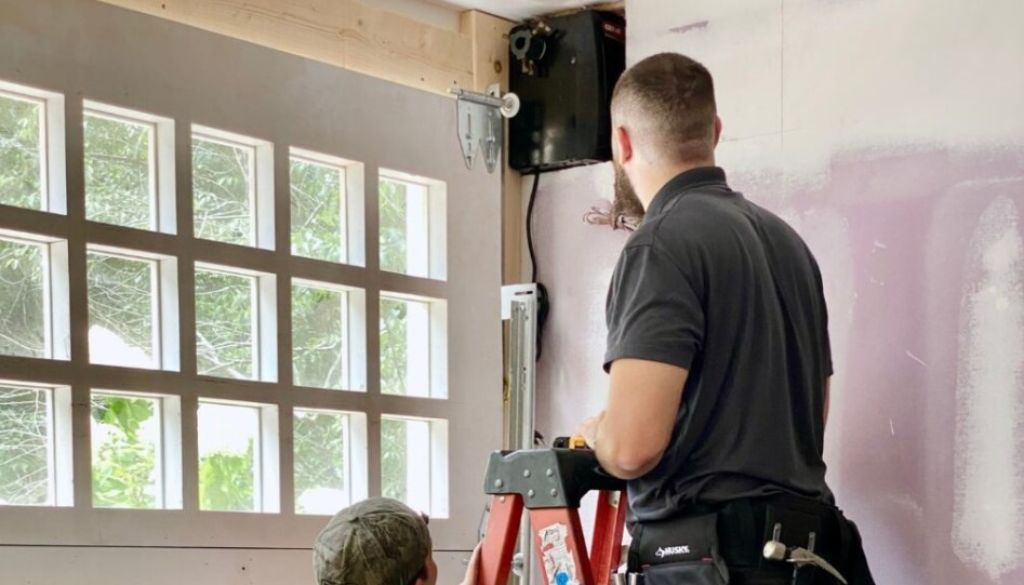
A garage door can look easy from the driveway, yet the spring system is doing innovative, demanding work every single day. Take notice of use, listen to the door, and deal with springtime substitute as planned upkeep as opposed to an emergency situation. That method shields the opener, expands the life of the door system, and maintains one of the busiest entrance points in your house working the method it should.